> For the complete documentation index, see [llms.txt](https://docs.getinfinity.app/user-guide/llms.txt). Markdown versions of documentation pages are available by appending `.md` to page URLs; this page is available as [Markdown](https://docs.getinfinity.app/user-guide/comprehensive-user-guide/2.-charts/chart-customization/changing-the-chart-type.md).
# Changing the Chart Type
#### Chart Type Selection
Infinity provides over 40 types of visualizations to help users effectively represent their data. The initial chart type selection varies based on the workflow used:
1. **AI-Builder Workflow:**
* The AI automatically selects the most suitable chart type based on the user's intent and dataset.
* Users can still manually change the chart type if needed.
2. **Manual Drag-and-Drop & SQL-Based Workflows:**
* By default, users see a table view of their dataset.
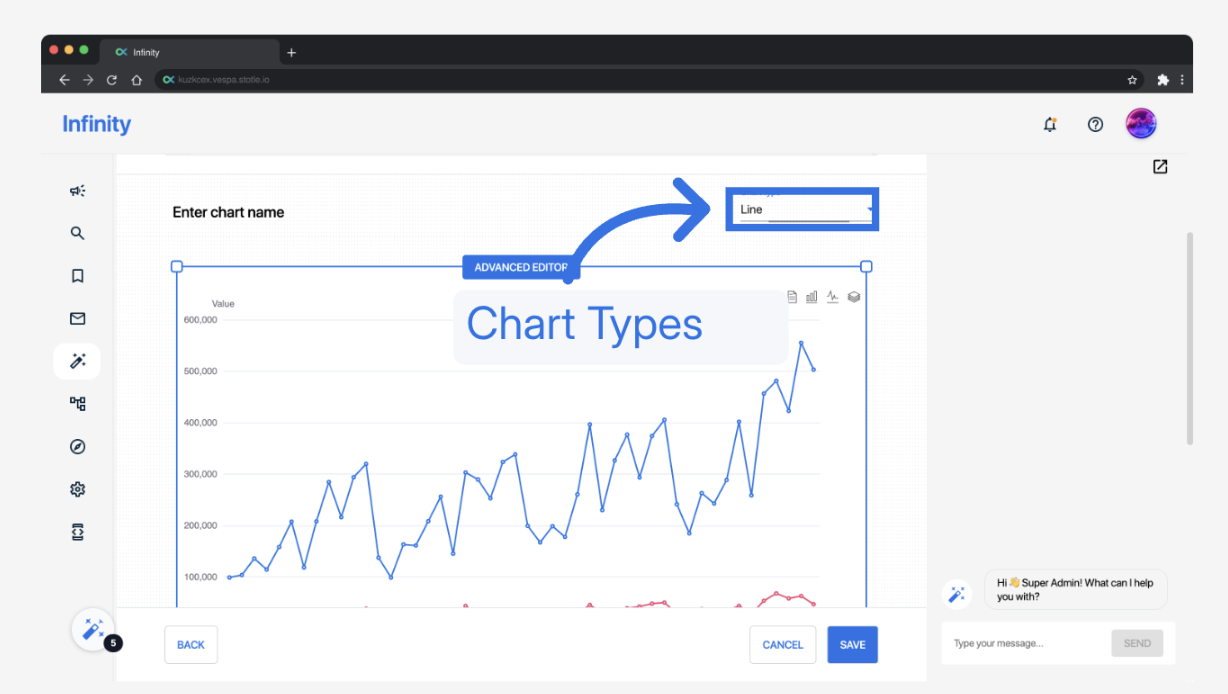
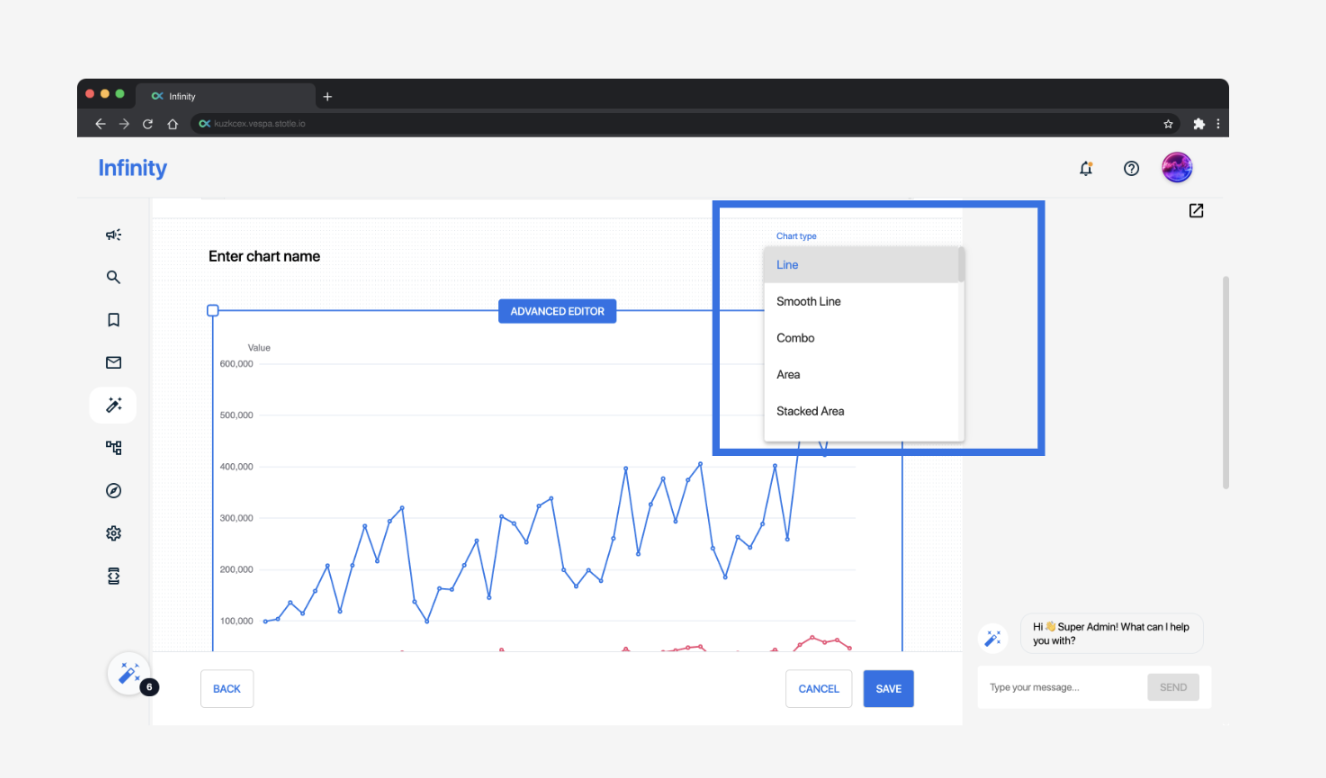
* The chart type can be changed using the **Chart Type Dropdown**, located at the top of the chart configuration page.
* Selecting a different chart type will adjust the **data components** accordingly to ensure compatibility with the selected visualization.
#### Key Considerations:
* Some chart types may require specific data formats (e.g., time-series data for line charts, categorical data for bar charts).
* The customization options may vary based on the chart type selected.
* If AI-selected, the chart type is optimized for the best visual representation but can be modified as needed.
The next section will cover **Data Components** and how they change based on the selected chart type.